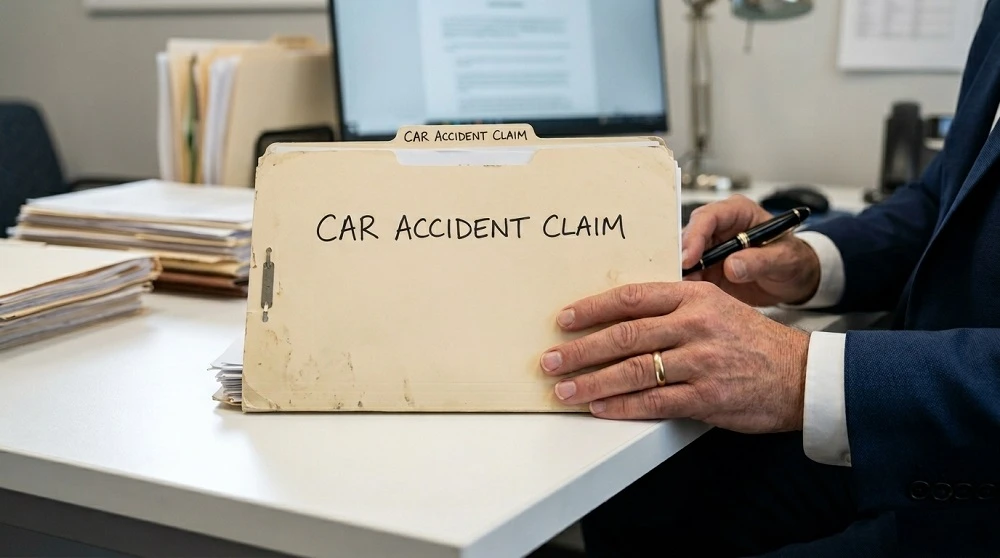
Everybody knows that a car accident can lead to an insurance claim or even a lawsuit. The mere fact of having insurance coverage doesn't prevent a lawsuit if the issue of fault or significant damages is alleged. While insurance often pays up to the policy limits when injuries and damages warrant it, a case may go to court if fault is disputed, damages exceed the limits, or the claim is undervalued.
At Cameron Law, our experienced Las Vegas personal injury attorneys handle these cases from the first insurance call through settlement talks and, when needed, the filing of a lawsuit. The real issue is rarely just “Can I sue?” The real issues are who is at fault, what coverage applies, what proof exists, and how Nevada law affects the payout.
Can Someone Sue You After a Car Accident Even If Insurance Is Involved
Most people use “claim” and “lawsuit” like they mean the same thing, but they do not. A claim usually starts with the insurance company. A lawsuit starts in court. That difference matters because many car accident cases settle during the claim stage and never reach trial.
What an Insurance Claim Usually Looks Like
A car accident claim usually begins when the injured party reports the crash to the insurer and sends proof of loss. That proof may include the police report, photos, repair estimates, medical records, wage-loss records, and other documents tied to the accident. The insurer then investigates fault, reviews the damages, and decides what it is willing to pay.
The crash is reported.
The insurer opens a file.
Records and bills are collected.
Fault and damages are reviewed.
Settlement talks begin.
This stage can move fast in a small property-damage case or drag out when liability is disputed, or the injuries are serious.
When a Claim Turns Into a Lawsuit
A lawsuit usually enters the picture when the insurer refuses to pay fair value, denies fault, disputes the injuries, or points to policy limits as a cap on payment.
A lawsuit may become more likely when:
The insurer denies liability.
The offer does not cover the losses.
The injuries are severe.
Several parties blame one another.
The claim is close to the filing deadline.
The practical point is simple: a claim is the negotiation stage, and a lawsuit is the court stage. One often leads to the other, but they are not the same thing.
What Can a Car Accident Claim Include
A personal injury claim or personal injury lawsuit can include more than one category of loss. The exact value depends on the facts, the records, and the share of fault assigned to the parties involved.
The Losses That Usually Show Up in a Claim
A strong claim usually combines hard numbers with easily traceable records. That means the claim file needs more than a story; it needs documents:
Medical bills
Future treatment costs
Lost wages
Reduced earning ability
Property damage
Pain and suffering
Other documented losses tied to the crash
That applies even in some crashes with no visible injury. An accident victim may still have a valid claim for property damage and other losses even without a diagnosis of a major bodily injury.
The Facts That Push Value Up or Down
Case value increases with clear liability and clean records, but decreases with gaps in the file, inconsistent treatment, or arguments that the injury was minor or unrelated.
The main factors driving claim value are injury severity, a history of immediate and consistent treatment, police reports, witness accounts, evidence of property damage repair, proof of lost wages, policy limits, and the plaintiff's degree of fault. This explains why similar accidents can yield vastly different case outcomes.
Can You Still Sue Without an Injury
A lawsuit is not limited to cases with severe physical injuries. A person may still bring a claim after a crash even if no major injury is diagnosed. What matters is whether there are legally recognized losses, not just visible harm.
Situations where a claim may still exist:
Property damage to the vehicle
Minor or delayed-onset injuries
Medical evaluations or diagnostic costs
Lost time from work
Out-of-pocket expenses tied to the crash
Insurance companies often challenge these claims by arguing that the impact was too minor to cause harm. The practical point is simple: no visible injury does not automatically mean no case, but the strength of the claim depends heavily on the available proof.
#cta_start
Don’t Guess What Your Accident Claim Is Worth
Cameron Law can use our decades of experience to review the facts, the records, and the coverage before you decide how to proceed.
What to Do in the First Hours and Days After the Wreck
Your first steps matter because the case begins to take shape before the insurance company even learns of the accident. The first records created after the crash often become the backbone of the claim, especially if fault is later disputed.
To have the best chance for a successful claim outcome, the first steps should focus on collecting the records that will still matter months later when the insurer starts testing the case:
Get medical care if you have pain, dizziness, numbness, headaches, or any sign of injury.
Call the police and get the report number.
Take photos of the vehicles, the road, visible injuries, and the scene.
Get witness names and numbers before people leave.
Exchange insurance and driver details with the other party.
Keep receipts and records for repairs, treatments, and missed work.
Do not rush into a recorded statement or release before the full picture of the damage is clear.
A weak first statement can hurt a later claim. A missing photo can turn an easy case into a blame fight. A gap in treatment can give the insurer room to argue that the injury was minor or unrelated.
That is why the first few days after a crash are less about saying the right thing and more about building a file the other side cannot easily pick apart.
Does a Taxi Accident Change the Analysis
Crashes involving a taxi fit inside the same legal framework as other vehicle accident cases: fault, insurance, damages, and proof.
Taxi accidents differ because they may involve a commercial carrier and company policy, not just a private driver.
Standard crash vs. taxi crash comparison table:
Issue
Standard Car Accident
Taxi Accident
Coverage Source
Private auto policy
Commercial policy or other taxi coverage
Possible Defendants
One driver, sometimes more
Driver, cab company, other driver, sometimes more
Extra Issues
Fault and damages
Fault, damages, company role, maintenance, driver conduct
Evidence Focus
Photos, medical records, police report
Same evidence, plus company and vehicle records in some cases
Nevada also has a separate rule for taxicab liability insurance. The state’s taxi cab statute, NRS Chapter 706, includes coverage up to $250,000 for bodily injury or death of one person, $500,000 for bodily injury or death of two or more persons, and $50,000 for property damage, or a $500,000 combined single limit. That is one reason taxi cases can look different from a standard two-car wreck.
Taxi cases may also involve additional evidence, such as:
Driver logs and dispatch records
Company policies and training records
Vehicle maintenance history
Surveillance or dashcam footage
These records do not exist in most private vehicle claims and can significantly affect how fault is evaluated.
The Nevada Rules That Can Lower a Claim’s Value or Block It Entirely
1. Comparative Negligence Can Shrink the Recovery
In Nevada, fault percentage is not just a label, but can significantly change the payout. Nevada operates under a "modified comparative negligence" rule, allowing injured parties to recover damages if they are 50% or less at fault. Under NRS 41.141, if a plaintiff is found 51% or more responsible for the accident, they cannot recover any damages.
That matters in plain terms. If the other side proves you were partly responsible, the payout can drop. If they push your share of fault too high, the claim can fail.
2. How Fault Percentage Affects the Final Recovery
Compensation is reduced by the percentage of fault assigned to them. If a plaintiff is partly at fault, the recovery is reduced by that percentage. For example:
If total damages are $100,000 and the plaintiff is 10% at fault, recovery may drop to $90,000.
If total damages are $100,000 and the plaintiff is 30% at fault, recovery may drop to $70,000.
If the plaintiff’s fault is greater than the defendant’s fault, recovery may be barred under Nevada’s modified comparative negligence rule.
That is why insurers push fault arguments so hard. Even a modest shift in fault percentage can cut a settlement by a large amount.
3. Filing Deadlines Still Run While the Claim Is Open
Nevada’s statute-of-limitations chapter, NRS 11.190, sets the general filing period used for most car accident injury cases as 2 years for most personal injury claims and 3 years for property damage claims. If you don’t file a lawsuit within that deadline, the case may be barred forever, preventing you from recovering compensation for your injuries and damages.
What This Means for Your Next Move After a Las Vegas Crash
So, can a person sue you for an accident? Yes. Can you sue someone personally for a car accident? Yes again. But the better way to frame it is this: what does the evidence show, what insurance applies, how much damage was done, and how much fault can be proven? Those four points usually decide where the claim goes.
If you are dealing with a crash in Nevada, Cameron Law can review the facts, deal with the insurer, and tell you where the case stands before a bad statement or low offer does damage. Contact us to talk with our Las Vegas team.
We want to change the way people view lawyers, one relationship at a time. ®
Injured in a weather-related accident in Las Vegas or Reno, Nevada? Discover how liability is determined & your legal rights. Get a free case review today!
Dog bite injury in Nevada? Learn your rights, average compensation for a dog bite, and how a Reno or Las Vegas lawyer helps with a dog bite injury claim.
Learn how to prove distracted driving negligence. Discover key evidence, Nevada laws, and strategies to strengthen your accident claim. Contact us today.