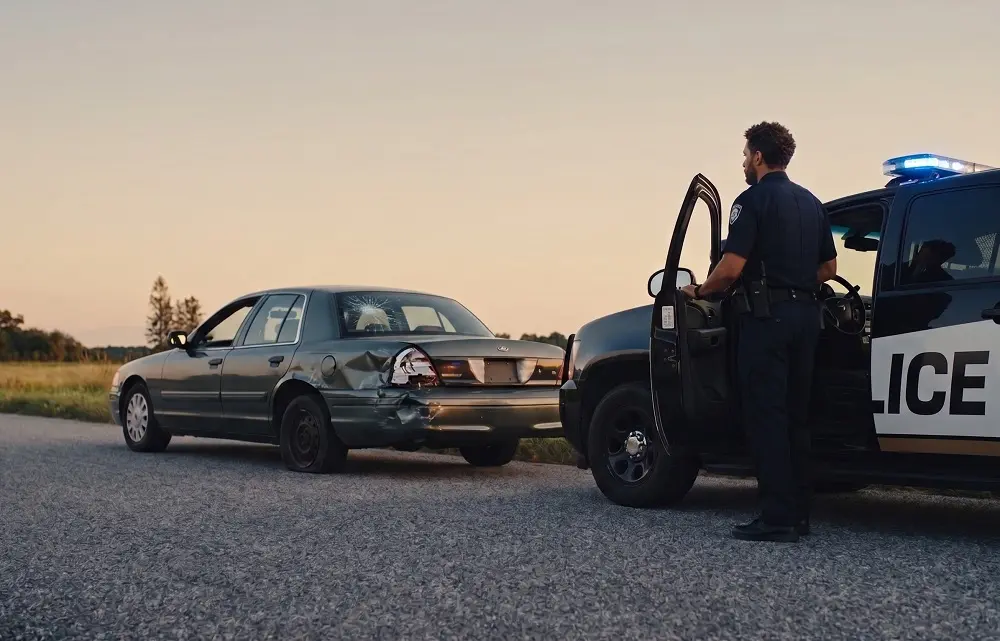
Hit-and-run accidents in Las Vegas are surging. In the first half of 2026 alone, LVMPD recorded over 2,796 hit-and-run reports, more than 60% higher than the same period in 2025. If a driver fled the scene after hitting you, the steps you take next can determine whether you recover compensation or walk away empty-handed. Below, we answer the most common questions Las Vegas hit-and-run victims ask about Nevada law, criminal penalties, police investigations, and insurance claims.
A hit-and-run accident is a collision in which a driver leaves the scene without identifying themselves to other people involved. According to Nevada’s hit-and-run laws, any driver involved in a crash has a legal duty to stop at the scene. This is not their only duty, however.
They must:
Exchange contact information with the other driver.
Show their driver’s license to the other driver, if requested.
Give aid to any injured parties, if they can reasonably do so.
Move their vehicle away from oncoming traffic, if they can safely do so.
Provide identifying information to law enforcement officers.
A driver who leaves the scene of an accident without fulfilling these duties can face criminal charges. Someone who crashes into an unattended vehicle without notifying law enforcement or the vehicle’s owner can also be charged with a misdemeanor.
What Is the Penalty for a Hit-and-Run in Las Vegas
The penalties for leaving the scene of an accident in Nevada vary significantly depending on whether anyone was injured.
Hit-and-Run with Property Damage Only (Misdemeanor)
If the crash caused only property damage and no one was hurt, leaving the scene is a misdemeanor under NRS 484E.020. The penalties include up to six months in jail, fines of up to $1,000, and six demerit points on your driving record. The Nevada DMV may also suspend your license independently of any court-imposed sentence.
Hit-and-Run with Injury or Death (Category B Felony)
When the accident results in bodily injury or death, leaving the scene becomes a Category B felony under NRS 484E.010. Conviction carries a prison sentence of 2 to 20 years and fines between $2,000 and $5,000. Critically, Nevada law prohibits the judge from suspending this sentence or granting probation. A separate felony charge applies for each person injured or killed, meaning a crash with multiple victims can lead to consecutive sentences.
Beyond criminal penalties, hit-and-run drivers also face civil liability. Victims can file a personal injury claim to pursue compensation for medical bills, lost wages, pain and suffering, and property damage. When a driver flees instead of calling for help, the delay in medical treatment can worsen injuries, and that choice can be used against the driver in a civil case.
How Does Las Vegas Police Investigate a Hit-and-Run
The Las Vegas Metropolitan Police Department investigates hit-and-run accidents based on the severity of the crash. Cases involving serious injuries or fatalities receive the most resources. According to LVMPD, only four hit-and-run detectives cover the entire Las Vegas Valley, and each carries approximately 300 active cases. As a result, investigators prioritize cases by severity.
Police typically use several methods to identify a fleeing driver: reviewing traffic camera and surveillance footage, interviewing witnesses, examining physical evidence such as paint transfer and vehicle debris, running partial license plate numbers through databases, and requesting dashcam footage from other drivers in the area.
For property-damage-only collisions, investigation resources are more limited. That is why gathering your own evidence at the scene is so important.
What Percent of Hit-and-Run Cases Get Solved
A March 2026 study from the AAA Foundation for Traffic Safety found that 15% of all police-reported crashes in 2023 involved a driver who fled the scene, the highest percentage recorded in any recent year. Cases involving serious injuries or fatalities receive far more investigative attention and are solved at higher rates, but property-damage-only crashes often go cold. In Las Vegas, LVMPD has only four hit-and-run detectives covering the entire valley, each carrying roughly 300 active cases, so investigations are prioritized by severity.
How Long Do Police Investigate a Hit-and-Run
There is no fixed timeline. Fatal and serious-injury hit-and-runs can remain active investigations for months or even years. Minor property-damage cases typically stay active for a shorter period unless new evidence surfaces. In Nevada, the statute of limitations for filing felony hit-and-run charges is generally three years, while misdemeanor charges must be filed within one year.
Can the Victim of a Hit-and-Run File a Lawsuit
If the police identify the hit-and-run driver, the victim has the right to file a lawsuit. However, a lawsuit is not always the best path to compensation. Instead, a car accident attorney will usually advise the victim to file a claim with either their own or the hit-and-run driver’s insurance company. If that claim doesn’t succeed, a lawsuit is often the next step.
Is It Worth Suing for a Hit-and-Run
Whether a lawsuit makes sense depends on your situation. If the at-fault driver is identified and has insurance or personal assets, a lawsuit can help you recover compensation for medical expenses, lost income, pain and suffering, and other losses. However, if the driver is uninsured and has no assets (like most people), collecting on a judgment may be difficult. Our experienced attorneys can use our advanced knowledge to evaluate your case and give you an honest opinion on the best path forward.
#cta_start
Hurt in a Hit-and-Run Accident in Las Vegas?
If you have been involved in a hit-and-run accident in Las Vegas, we can help. We will review your case and explain your options in clear terms. Contact Cameron Law today for a free consultation.
If I Cannot Find the Hit-and-Run Driver, Can I Get Compensation
If the driver who hit you is never identified, your path to compensation is more limited, but it is not necessarily closed. Your own auto insurance policy becomes your primary resource.
Nevada's Minimum Liability Coverage
Nevada law requires all drivers to carry minimum liability insurance:
$25,000 in bodily injury coverage per person.
$50,000 in total bodily injury coverage per accident.
$20,000 in property damage coverage.
However, this minimum coverage only pays for damage you cause to others. It does not reimburse you for your own losses after a hit-and-run.
Coverage Options That Can Protect You
Many Nevada drivers choose to purchase additional coverage that can help in a hit-and-run situation:
Uninsured/Underinsured Motorist Coverage (UM/UIM): This is the most valuable coverage for hit-and-run victims. UM/UIM treats the unknown hit-and-run driver as an uninsured motorist, meaning your own insurer pays for your medical treatment, lost wages, and other damages up to your policy limits.
Medical Payments Coverage (MedPay): MedPay covers medical expenses for you and your passengers regardless of who was at fault, with no deductible. It pays out quickly and can cover ambulance rides, emergency room visits, and follow-up care.
Collision Coverage: If you carry collision coverage, it can pay for repairs to your vehicle after a hit-and-run, minus your deductible.
Filing a claim with your own insurer, even when you are not at fault, can sometimes affect your premium. While a not-at-fault claim generally should not trigger a surcharge, you may lose claims-free discounts that were previously applied to your policy.
How Do I Get Compensation When the Hit-and-Run Driver Is Found
If the hit-and-run driver is identified and insured, you can file a claim with their auto insurance carrier, seeking compensation for medical expenses and property damage.
Most car accident claims are resolved through insurance settlements. However, if a fair settlement cannot be reached, you may consider filing a lawsuit and proceeding to trial.
Given the stakes, working with our experienced trial lawyers can make a significant difference.
How Do Insurance Companies Investigate a Hit-and-Run
After you file a claim, the insurance company will typically review the police report, examine your medical records, assess vehicle damage estimates, and may send an adjuster to inspect the vehicle. They may also use an in-house investigator to interview witnesses and review any available surveillance footage. Be aware that insurance adjusters work for the insurance company, not for you. Their goal is to minimize payouts.
What Happens If the At-Fault Driver Is Not Insured
Suppose that the police identify the driver who hit you and fled the scene. Unfortunately, you discover that the driver fled because they did not have auto insurance. In that case, the path to compensation is more complicated.
You have the right to file a personal injury lawsuit against the driver. However, some uninsured drivers lack assets that can be seized or garnished. Even if you win the lawsuit, you might not ever recover your damages. Some lawyers call these defendants “judgment proof”; that is, collecting a judgment from them is difficult or impossible.
In such cases, victims typically need to turn to their own insurance coverage. However, Nevada’s minimum liability coverage does not offer financial support to victims of hit-and-run accidents. Only drivers who opt for add-ons like UM/UIM coverage or Medpay have this route open to them.
The path to compensation is hard, but that doesn’t mean it’s impossible. A lawyer might discover additional options after reviewing your case, such as a third-party lawsuit against a business or person who contributed to the accident. Just remember that all the key steps you take after the crash can make or break your case.
How Long Do I Have to Report a Hit-and-Run in Nevada
Nevada law requires you to report a crash as soon as possible, and you should call 911 immediately after the incident. No specific statutory window automatically bars you from filing a police report later, but delays make it harder for police to locate the fleeing driver. Surveillance footage may be overwritten, witnesses may forget details, and physical evidence can be lost.
For insurance purposes, most policies require prompt notification. Failing to report the crash quickly could give your insurance company grounds to dispute your claim. The best approach is to report the hit-and-run to police and your insurer on the same day it occurs.
Get Cameron Law in Your Corner
A claim after a hit-and-run accident in Las Vegas is not like any other type of accident claim. Success requires a clear understanding of legal obligations, potential penalties, and available avenues for seeking compensation.
With everything you’re up against, you need a steadfast legal advocate to protect your rights and find the most promising path to compensation. Contact Cameron Law today for a free consultation.
We want to change the way people view lawyers, one relationship at a time. ®
Are you confused about Nevada's motorcycle helmet laws? This blog post will provide a comprehensive overview of the regulations, including requirements for motorcycle drivers and passengers, potential penalties for non-compliance, strategies for contesting citations and much more. Whether you're a seasoned rider or just getting started, this blog will equip you with the knowledge to navigate Nevada's helmet laws and prioritize your safety on the road. If you need urgent assistance from the well-qualified Las Vegas motorcycle accident lawyer, call Cameron Law at 702-745-4545.
Explore Nevada ride-sharing accident laws, including regulations, insurance requirements. Reach out to our Las Vegas ride-sharing accident lawyer for consultation today!
Navigating the complexities of auto insurance can be daunting, especially when it comes to protecting yourself from uninsured motorists in Nevada. An auto insurance policy includes various components, one of which is Uninsured Motorist Coverage (UM). Uninsured Motorist Coverage (UM) is not only mandatory in this state but also essential for safeguarding your finances in case of accidents with uninsured drivers. Understanding how UM works can ensure you’re adequately protected against unexpected expenses that could arise from such incidents. Whether you need advice on UM coverage, assistance with filing a claim, or representation in negotiations, our company with experienced Las Vegas car accident lawyers are here to help you.