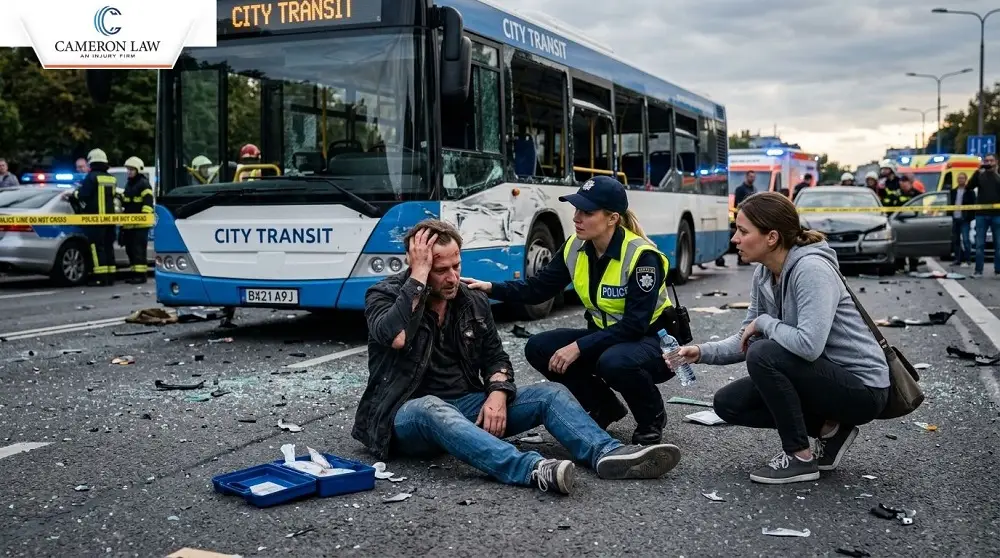
Being struck or knocked down while waiting for a bus can cause serious injuries, including broken bones, traumatic brain injury, or spinal cord damage. In Nevada, these cases can be legally complex because liability may involve a transit agency, a private company, a city or county government, a third-party driver, a vehicle manufacturer, or multiple at-fault parties.
This guide explains how Nevada bus stop accident liability works, which laws may apply, and what steps can help protect your right to compensation. For direct legal help, our Las Vegas bus accident lawyers can review your case at no upfront cost.
How Common Are Bus Stop Injuries in Nevada
Nevada's streets are among the most dangerous in the country for pedestrians. In 2024, Nevada's pedestrian fatality rate was 3.46 deaths per 100,000 people, ranking fourth highest in the nation, with 113 pedestrian deaths recorded that year. Of those deaths, 96 occurred in Clark County and 13 in Washoe County, where Reno is located.
According to the RTC's own published report card, the Southern Nevada transit system carried nearly 49.6 million passenger trips in fiscal year 2023, across a fixed-route network of 3,698 bus stops. RTC Reno's Regional Transportation Commission of Washoe County serves thousands of additional daily riders across northern Nevada. When tens of millions of trips are made every year at bus stops located along busy corridors, the risk of injury at those stops is real and statistically significant.
What Types of Incidents Happen at Nevada Bus Stops
Injuries at bus stops are not limited to being struck by the bus itself. Common causes include:
Bus Driver Negligence
A driver who pulls too close to the curb, overshoots a stop, or fails to check for waiting pedestrians before maneuvering can cause devastating injuries without a collision ever occurring.
Bus Jumping the Curb
A bus that loses control, experiences a mechanical failure, or is operated carelessly can mount a sidewalk and strike people who had every reason to believe they were in a safe location.
Third-Party Vehicle Crashes
A car, truck, or motorcycle that loses control near a bus stop may plow into waiting riders. In dense urban areas like Las Vegas, Henderson, North Las Vegas, and Reno, high traffic volumes at busy stops create ongoing exposure to this risk.
Dangerous Stop Design or Condition
Some bus shelters and stops are poorly designed or maintained. Stops located too close to fast-moving traffic, those without barriers or adequate lighting, or those with slippery or uneven surfaces can contribute directly to injury.
Shuttle and Charter Bus Incidents
Hotels, casinos, and tour operators throughout Nevada operate private shuttle fleets. Injuries involving these vehicles at designated pickup and drop-off zones raise their own distinct liability questions.
#cta_start
Were You Seriously Injured at a Las Vegas or Reno Bus Stop?
Bus stop accidents in Nevada involve multiple liable parties and strict deadlines. Cameron Law serves victims in Las Vegas and Reno with no upfront cost to our clients.
Who Can Be Held Liable Under Nevada Bus Stop Accident Laws
This is where these cases become genuinely complex. Nevada law allows multiple parties to share liability, and identifying each one correctly determines how much compensation you can ultimately recover.
1. The Bus Driver
A driver who is distracted, fatigued, speeding, or operating the bus in a reckless manner may be personally negligent. In most cases, however, the employer is the more viable target. Nevada follows the doctrine of respondeat superior, which holds employers responsible for the negligent acts of their employees committed within the scope of employment.
Under Nevada Revised Statutes § 41.031, the State of Nevada and its political subdivisions have waived sovereign immunity and can be sued for negligence. However, this waiver comes with important conditions:
Notice of Claim requirement. Under NRS § 41.036, anyone with a tort claim against a Nevada state agency must file that claim with the Attorney General's office within two years of the date of injury. Claims against a political subdivision, such as a county or city transit authority, must be filed with the governing body of that subdivision within the same two-year window.
Damages cap. Under NRS § 41.035, damages awarded against a government entity in Nevada are capped at $200,000 per claim. Punitive damages are not available against public entities.
These restrictions make it critical to identify every potentially liable party early. If a private contractor or third-party driver is also responsible, their share of liability is not subject to the same cap.
3. Private Shuttle and Charter Bus Companies
Nevada's hospitality and tourism industry relies heavily on private shuttle operators. Hotels on the Las Vegas Strip, airport ground transportation providers, and tour charter companies run fleets of vehicles that pick up and drop off passengers across the metro area. These companies are subject to both Nevada state law and federal oversight.
The Federal Motor Carrier Safety Administration (FMCSA) regulates private commercial motor carriers, including many shuttle and charter operations. FMCSA rules govern driver hours of service, vehicle maintenance, inspection records, and licensing requirements. If a private operator violates these federal regulations and someone is injured as a result, that violation can be powerful evidence of negligence.
Unlike claims against the RTC, claims against private companies are not subject to the $200,000 governmental damages cap, and punitive damages may be available under NRS § 42.005 if the evidence shows malicious, oppressive, or fraudulent conduct.
4. The City, County, or Another Government Entity
If the bus stop itself was negligently designed, placed in a dangerous location, or left in disrepair, you may have a premises liability claim against the local government responsible for that infrastructure. Examples include stops without curb protection adjacent to high-speed traffic, shelters with broken or missing lighting in poorly lit corridors, or stops placed at locations with known sight-line hazards.
These claims also fall under the Nevada Tort Claims Act framework described above, so the procedural requirements and damages limits of NRS Chapter 41 apply.
5. A Negligent Third-Party Driver
If another vehicle veered into a bus stop zone, rear-ended a bus that then struck waiting riders, or ran a red light and hit people on the curb, that driver can be held directly liable under Nevada's standard negligence framework. In Las Vegas, failure-to-yield violations have surged to become the top cause of fatal crashes, and the city averages over 20,000 reported traffic accidents per year. These numbers reflect the elevated danger that third-party drivers pose to pedestrians waiting at street-level stops.
6. Vehicle or Equipment Manufacturers
If a mechanical defect caused the accident, such as brake failure, steering system malfunction, or a defective door mechanism, the bus or component manufacturer may be liable under product liability law. Nevada courts recognize claims for both manufacturing defects and design defects. Investigating maintenance logs, inspection records, and any relevant NHTSA safety recalls is a necessary step in any case where mechanical failure is suspected.
Nevada's Modified Comparative Fault Rule
Nevada applies a modified comparative negligence standard under NRS § 41.141. This means that if you are found to share some responsibility for your own injury, your compensation is reduced by your percentage of fault. However, if you are found to be 51 percent or more at fault, you are barred from recovering anything.
In bus stop cases, a defendant or insurer might argue that you were standing too close to the road, wearing dark clothing at night, or distracted by your phone. These arguments are common. They can be countered with surveillance footage, witness testimony, and expert analysis of stop design, but they underscore why a thorough investigation matters from the very beginning.
What Damages Can You Recover
Depending on the facts of your case and the parties involved, you may be entitled to compensation for:
Emergency medical treatment and hospitalization
Surgery, rehabilitation, and ongoing therapy
Future medical expenses, including long-term care
Lost wages and reduced earning capacity
Pain and suffering
Permanent disability or disfigurement
Emotional distress and psychological treatment
Loss of enjoyment of life
If a government entity is one of the defendants, the $200,000 cap under NRS § 41.035 applies to that portion of your claim. Compensation from private defendants is not subject to that limit.
How Long Do You Have to File a Claim
For most personal injury claims in Nevada, the statute of limitations is two years from the date of injury under NRS § 11.190(4)(e). Missing that deadline almost always means losing the right to sue, regardless of how strong the underlying claim may be.
When a government entity is involved, the two-year notice-of-claim requirement under NRS § 41.036 runs concurrently, but it is a separate procedural step that must be completed correctly. A defective notice can jeopardize your entire case. An attorney who handles Nevada public entity claims will know exactly how to file one properly.
#cta_start
Nevada Deadlines Are Strict. Do Not Wait.
Nevada deadlines are strict, and government claims add extra steps. Contact Cameron Law to protect your rights before time runs out.
After a bus stop injury, taking the right steps quickly can help protect your health, your evidence, and your potential claim.
Call 911: Report the accident and request emergency medical assistance. A police report creates an official record.
Get medical attention immediately: Even minor injuries can worsen. A same-day medical visit helps document your injuries and connect them to the incident.
Document the scene: Photograph the bus stop, road, vehicles, injuries, lighting, and any hazardous conditions.
Gather witness information: Ask each witness for their name and phone number. Their accounts may help clarify what happened.
Preserve evidence: Surveillance footage near bus stops may be overwritten within days. An attorney can send a litigation hold letter to preserve it.
Contact a personal injury attorney as soon as possible: Nevada bus stop injury cases can involve multiple parties, government claim rules, and strict deadlines. Early legal help can protect your claim.
Why Experience Matters in Bus Stop Accident Claims
Bus stop accident cases in Nevada can involve strict deadlines, missing evidence, government notice requirements, and multiple responsible parties. Cameron Law helps injury victims in Las Vegas, Henderson, North Las Vegas, and Reno investigate what happened, identify who may be liable, and pursue available compensation.
If you or a loved one was injured at a bus stop or shuttle pickup zone, contact Cameron Law today for a free consultation.
#cta_start
Injured at a Nevada Bus Stop?
The experienced Nevada bus stop accident lawyers at Cameron Law help injury victims identify liable parties, meet legal deadlines, and pursue compensation with no fees unless we win.
Learn practical steps to strengthen your car accident injury claim — from evidence and medical records to negotiation strategy and legal representation.