At Cameron Law, we have been successfully handling rideshare accident claims across Las Vegas and Nevada for years. As part of our ongoing commitment to public safety and informed legal advocacy, our team of experienced Las Vegas Uber accident attorneys compiled publicly available crash data, traffic records, and tourism patterns to examine where and why Uber and Lyft accidents are most concentrated across the Las Vegas Valley. This research study, conducted on behalf of our firm, aims to help riders, pedestrians, and residents understand the local risk landscape.
Why Rideshare Accident Patterns in Las Vegas Are Different from Other Cities
Las Vegas is not a typical American city. It draws roughly 41.7 million visitors per year, and that extraordinary volume of tourism shapes everything about how traffic flows, where rideshare vehicles concentrate, and why crash risks vary dramatically from one neighborhood to the next.
Uber and Lyft drivers in Nevada carry some of the highest insurance premiums in the country (averaging $403 per year), a figure that directly reflects the elevated risk environment local drivers handle daily. Rideshare vehicles in Las Vegas cluster overwhelmingly near resorts, Harry Reid International Airport, and nightlife corridors, creating uneven crash exposure across the metro area.
#cta_start
Hurt in a Rideshare Crash on the Strip?
Cameron Law handles the insurers so you can focus on healing.
The six zones below reflect distinct traffic environments, demand patterns, and crash histories. While no neighborhood is entirely free of rideshare accident risk, the data reveals a clear concentration of incidents in corridors where tourism density, nightlife activity, and highway exposure converge.
The Las Vegas Strip and Paradise (Highest Risk Zone)
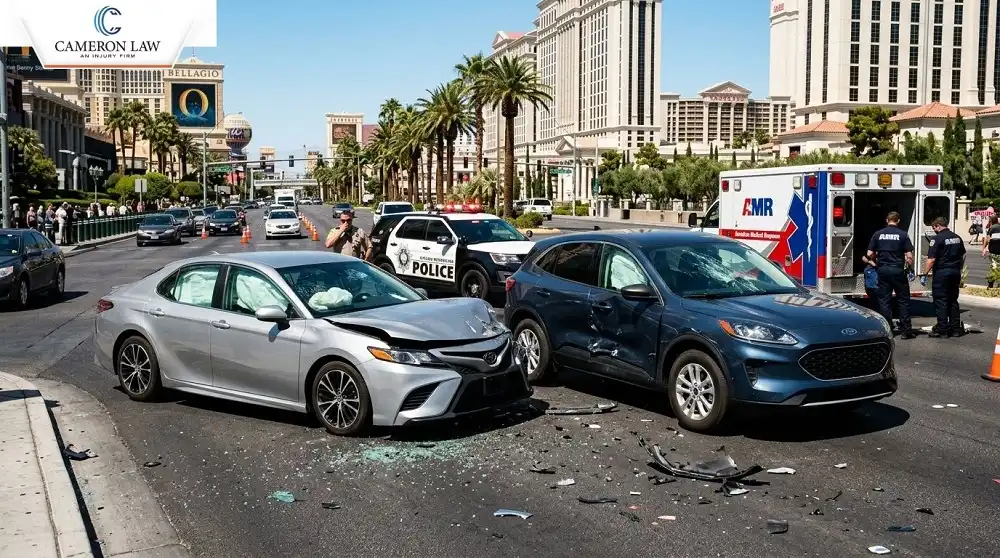
The Strip, a 4.2-mile corridor running through the unincorporated township of Paradise, is the single highest-concentration zone for rideshare activity in Nevada. The most-visited Uber and Lyft pickup and drop-off points are clustered here, from Caesars Palace to the Sphere on Sands Avenue. Traffic congestion is a persistent condition, not a peak-hour anomaly. Fatigued drivers, intoxicated passengers, unfamiliar tourists, and dense pedestrian foot traffic create a collision environment that ranks among the most concentrated in Nevada.
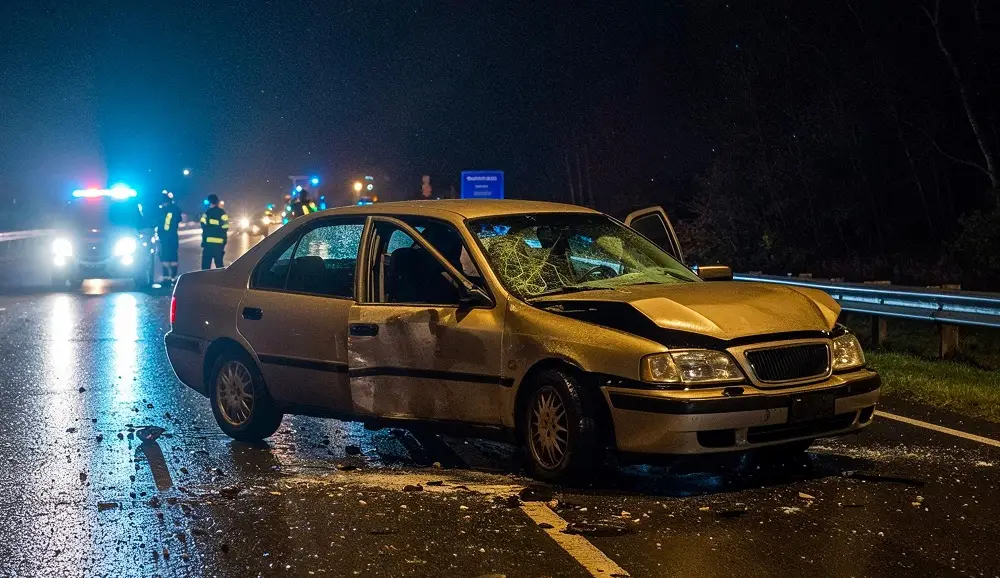
Nighttime risk is particularly acute, with head-on and wrong-way crashes near casino exits peaking between midnight and 4 AM.
Primary risk drivers: High rideshare volume, pedestrian-vehicle conflicts, impaired road users, distracted driving near visual attractions, and overnight demand surges.
Harry Reid International Airport Corridor (High Risk Zone)
Harry Reid International Airport is the second-highest concentration of rideshare activity in the city, with designated pickup zones feeding directly into the same high-density risk cluster as the Strip. During major events like Formula 1 and large conventions, surge pricing drives a sharp increase in driver volume and urgency in the surrounding corridor.
Rental cars operated by out-of-state drivers unfamiliar with local roads add further friction. Highway accidents along I-15, US-95, and the 215 Beltway near the airport are frequent, with crashes clustering during both morning and evening peak travel windows.
Primary risk drivers: Highway merging, high driver turnover rate, out-of-state vehicle operators, and event-driven demand spikes.
Downtown Las Vegas and Fremont Street (Elevated Risk Zone)
Downtown Las Vegas and the Fremont Street corridor present a distinct risk profile from the Strip. Rideshare vehicles here handle heavy pedestrian traffic from late-night movement between casinos, bars, and entertainment venues.
Wrong-way driving is a persistent concern in this area, with intersections like Sahara/Decatur and Charleston/Eastern among the most frequently cited locations for head-on collisions in Clark County. The grid of one-way streets running through Downtown adds further navigation risk for rideshare drivers relying on app-based GPS without local road familiarity.
Primary risk drivers: Pedestrian density, one-way street navigation errors, late-night demand volume, and impaired road users.
North Las Vegas (Moderate-to-Elevated Risk Zone)
North Las Vegas lies north of Lake Mead Boulevard and is a distinct municipality. Its risk profile is shaped less by tourism than by highway exposure and residential traffic patterns overlapping with rideshare corridors connecting riders to the Strip.
Local commuter traffic and rideshare vehicles repositioning from the Strip back toward suburban pickup zones share the same roads, creating friction at key interchange points. The I-15/US-95 interchange is a documented location for chain-reaction collisions that spike during rush hours and rare rain events, when desert road oils create slick surface conditions.
Primary risk drivers: Highway interchange exposure, commuter-rideshare traffic mixing, and repositioning trips from the Strip.
Summerlin and Spring Valley (Lower-to-Moderate Risk Zone)
Summerlin and the adjacent Spring Valley township have a more residential risk character. Rideshare demand here is driven primarily by local residents and convention attendees rather than Strip-bound tourism traffic. Shopping centers like Town Square and Downtown Summerlin see frequent minor parking lot collisions, some involving rideshare pickups and drop-offs. Steep grades on Summerlin Parkway create rollover risk, and active construction zones along the I-11 corridor add lane-reduction hazards.
The absence of overnight nightlife demand and heavy pedestrian density means rideshare crash exposure here remains comparatively lower than in tourist-facing zones.
Primary risk drivers: Construction zone exposure, residential intersection risk, and moderate rideshare volume.
Henderson (Lower Risk Zone with Emerging Concerns)
Henderson records the lowest rideshare accident concentration among the major zones in our study. Its largely suburban character, newer road infrastructure, and lower nightlife density reduce many of the crash triggers common in tourist corridors. That said, the zone is not without risk.
Ongoing construction has introduced hazard zones on key arterials, and residential roads see speed and distraction-related crashes with regularity. As rideshare demand in Henderson grows alongside continued development, crash exposure is likely to increase.
Primary risk drivers: Construction zones, residential road speed violations, and growing rideshare demand.
Key Findings
Our 2026 study produced several findings relevant to riders, drivers, and injury claimants in the Las Vegas Valley:
Geography matters. The Strip-Paradise corridor and Airport approach roads carry a disproportionate share of rideshare crash exposure relative to their geographic footprint.
Time of day is a major variable. Head-on crashes near casino corridors peak between midnight and 4 AM, while airport and highway crashes cluster during traditional rush-hour windows.
Tourism patterns amplify crash exposure. Major events like Formula 1 races, New Year's Eve, and large conventions drive surge pricing, increasing driver volume and urgency in already high-density zones.
Injury rates in rideshare crashes are significant. Approximately 35% of rideshare accidents in Nevada result in injuries, underscoring the importance of knowing your legal rights after a crash.
Insurance complexity is a consistent challenge. In Nevada, Uber and Lyft provide up to $1.5 million in liability coverage when a driver is actively transporting a passenger, but coverage drops substantially during Period 1, when the app is on but no passenger is assigned. Understanding how Nevada ride-sharing accident laws define each coverage period is critical to knowing which policy applies to your claim.
What This Means If You Were Hurt in a Las Vegas Rideshare Accident
Nevada gives injured parties two years from the date of an accident to file a personal injury claim, but evidence from high-volume crash corridors (camera footage, trip logs, and witness statements) fades quickly. If you were injured in a rideshare crash anywhere in the Las Vegas Valley, the attorneys at Cameron Law are here to help with your claim.
Contact us today for a free consultation. We are available 24/7, and you pay nothing unless we recover compensation for you.
#cta_start
Hurt in a Rideshare Crash? Cameron Law Can Help.
Our attorneys have experience handling complex Uber and Lyft accident claims across Las Vegas, Henderson, Paradise, North Las Vegas, Spring Valley, and Summerlin. We fight for full compensation, including medical bills, lost wages, and pain and suffering.